A Practical Assessment of the Green Floral Frame Collection
Digital illustration collections are a staple resource for creators, but their value hinges on utility and execution beyond mere aesthetic appeal. The Green Floral Frame Collection, a watercolor floral illustration designed for framing and arrangement, represents a specific type of asset that warrants a closer, practical examination. This analysis focuses on its tangible characteristics and how they translate into real-world application for the professional or serious hobbyist.
Core Characteristics and Design Intent
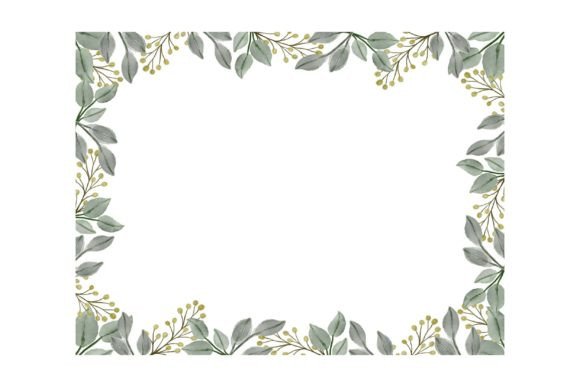
At its core, the Green Floral Frame Collection is a single, cohesive illustration of a floral arrangement rendered in a watercolor style. The key feature is its framing nature; the artwork is designed to be a contained, border-like element. This distinguishes it from isolated floral clip art or sprawling background patterns. The watercolor technique offers a soft, organic texture with gentle color gradients and visible brushstroke nuances, aiming for a handcrafted, natural feel.
The primary purpose is clear: to serve as a versatile decorative graphic foundation. Its design intent is not to be the central subject of a complex composition but to act as a ready-made ornamental frame or a structured decorative accent. This inherent purpose dictates its strengths and guides its appropriate use cases.
Evaluating File Formats and Usability
A significant practical aspect of any digital collection is the provided file formats. This collection includes .EPS 10, .JPG, and .PNG files. The .EPS 10 format is a vector-based file, which is crucial for scalability. This means the illustration can be resized to any dimension without loss of quality, a fundamental requirement for applications ranging from small invitation cards to large format posters or fabric prints. For professionals in design or marketing, this vector compatibility ensures reliability across diverse project scales.
The .JPG offers a standard raster image suitable for digital use where extreme scaling isn’t required, such as web graphics or mock-ups. The .PNG format, typically with a transparent background, is particularly valuable. This allows the floral frame to be layered over other backgrounds seamlessly, essential for creating wallpapers, overlays on product mockups for mugs or tees, or integrating into digital card designs without a restrictive bounding box. The inclusion of these three formats covers most common professional needs, enhancing the asset’s flexibility.
Practical Value in Application
The stated use cases—wallpapers, wreaths, invitations, cards, fabric, mugs, tee designs—are plausible, but their effectiveness depends on the project's specific requirements. For quick-turnaround projects like greeting cards or digital invitations for events, the collection provides a complete ornamental element. A user can employ the PNG over a colored background, add text within the framed center, and achieve a polished look with minimal design time. This is a considerable strength for entrepreneurs, freelancers, or educators needing consistent decorative assets.
For physical product applications like fabric, mugs, or t-shirts, the vector EPS file is indispensable. It allows the design to be adapted to the exact specifications of a printer or manufacturer. The cohesive, single-frame design can translate well onto these items, offering a unified branded aesthetic for small businesses. However, it’s important to note that as a single illustration, it provides one style. For a product line requiring multiple variations, the user would need to create derivatives or seek additional assets.
Considering Audience and Project Fit
This collection will benefit users who require a predefined, elegant floral motif that doesn’t demand deconstruction or complex editing. Bloggers and publishers might find it suitable for creating series-specific graphics or featured image borders. Marketers could leverage it for campaign materials aiming for a soft, natural brand tone. Its most natural fit is for projects where time efficiency is key and the watercolor floral style aligns with the intended audience’s preferences—think of wellness brands, lifestyle content, wedding-related businesses, or artisan crafts.
Conversely, it may be a limitation for designers seeking highly customizable, modular floral elements where each leaf or flower can be manipulated independently. This is a complete frame, not a building kit. Furthermore, while the watercolor style is appealing, its specific color palette and composition are fixed. Users needing to perfectly match an existing brand color scheme might find it less flexible without advanced graphic editing skills to recolor the vector file.
Long-Term Value and Consistency
From a long-term perspective, a well-executed vector graphic like this can offer sustained value. Its scalability and format variety mean it can be repurposed across different media over time, maintaining visual consistency for a brand or creator. For a small business owner, using the same floral frame on invitations, website elements, and merchandise can build recognizable aesthetic cohesion.
The reliability of the asset lies in its technical execution. A clean vector file with properly defined paths, a high-resolution raster backup, and a usable transparent PNG constitutes a professionally packaged resource. This reduces technical hurdles in production workflows. The presentation is straightforward: it is a functional asset, not an over-designed package with unnecessary extras.
Professional Observations on Integration
In practice, integrating such an asset requires an understanding of its boundaries. The floral frame will have a defined center area. For use as a wreath or circular frame, the user must assess if the illustration's proportions naturally suit that shape or if cropping and adjustment are needed. When used for wallpapers, the PNG format’s transparency allows it to function as an overlay on a desktop background, but its effectiveness depends on the screen resolution and the underlying background color contrast.
A realistic recommendation is to use it as a starting point or a core element rather than a final, immutable design. Even with a single illustration, adjustments to saturation, combining it with solid color blocks, or adding text with complementary fonts can greatly expand its utility. Its effectiveness is amplified when paired with strong typography or other minimalist design elements that allow the watercolor detail to shine without creating visual clutter.
The Green Floral Frame Collection is a focused tool. Its worth is not in limitless creativity but in providing a specific, high-quality stylistic solution that saves time and ensures a baseline of design quality. For the right user with aligned needs, it is a competent and efficient resource. For those seeking boundless modularity or a radically different aesthetic, it is simply not the appropriate tool. This distinction is the most critical consideration for any potential user.