The Delicate Art of Floral Logo Design in Vector Illustration
When a brand seeks to communicate values like natural beauty, organic growth, or delicate elegance, a floral logo can be an evocative and powerful choice. The specific approach of creating this logo through vector illustration, however, brings a distinct set of characteristics, advantages, and considerations that are vital for anyone researching design options. Understanding what makes Floral Logo Design, Vector Illustration unique—and how it compares to other stylistic and technical approaches—is key to determining if it aligns with your brand's identity, practical needs, and long-term goals.
What Distinguishes Vector-Based Floral Logo Design?
Floral Logo Design, Vector Illustration refers to the creation of brand marks using floral motifs—flowers, leaves, vines, blossoms—crafted entirely with vector graphics software. Unlike raster images (like photographs or pixel-based drawings), vector illustrations are built from mathematical points, lines, and curves. This fundamental technical choice defines its core attributes. The resulting artwork is inherently scalable; a small bud icon can be enlarged to billboard size without any loss of clarity or sharpness. This makes Floral Logo Design, Vector Illustration exceptionally practical for a brand's varied applications, from a tiny social media avatar to large-scale packaging.
The style is also defined by precision and clean geometry. Even the most organic, flowing vine or petal is rendered with controlled, editable paths. This allows for a spectrum of artistic expression within the vector realm: from highly detailed, intricate botanical drawings to minimalist, abstracted line art. The "vector" nature ensures the design remains editable and modular. Colors can be changed globally, individual elements can be rearranged, and the logo can be easily adapted for different contexts, such as creating a monochrome version for embroidered staff uniforms.
Comparing Styles: From Detailed Realism to Abstract Line Icons
Within the category of Floral Logo Design, Vector Illustration, there exists a significant range of stylistic approaches. Two prominent ends of this spectrum are detailed illustrative floral logos and the increasingly popular floral logo design expressed as a vector illustration style line icon abstract artwork.
Detailed Floral Vector Illustrations
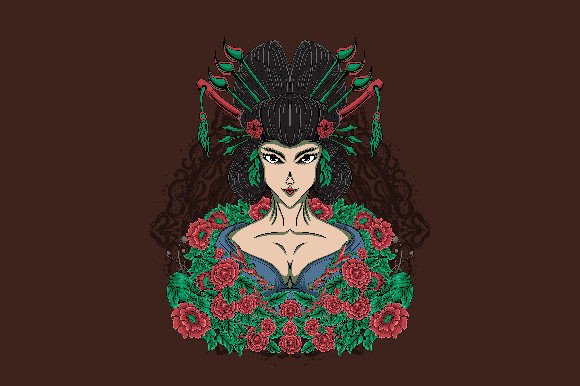
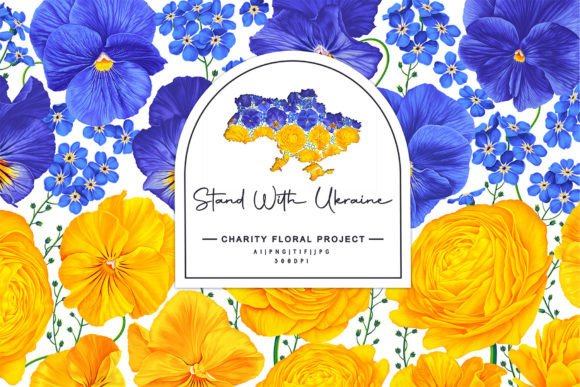
This approach leans towards realism and complexity. It might involve a meticulously drawn rose with layered petals, subtle shading gradients, and textured stems. The strength here is in richness and immediate visual recognition. It conveys craftsmanship, tradition, and a connection to the natural world in a direct way. Brands in industries like boutique gardening, luxury cosmetics, or high-end wedding planning might find this detailed style resonates deeply. However, the tradeoffs are worth noting. A highly detailed floral vector logo can become visually busy when scaled down, may not reproduce well on very low-resolution screens, and its complexity can make it less versatile for ancillary design systems.
The Abstract Line Icon Approach
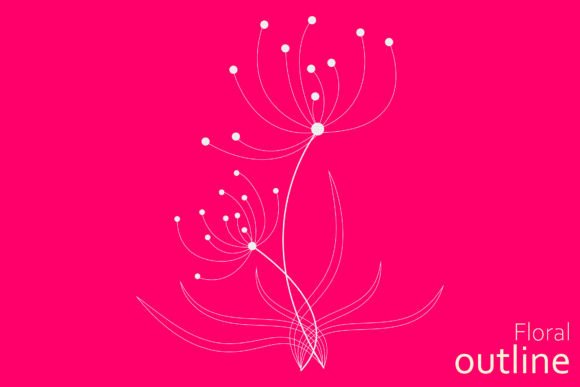
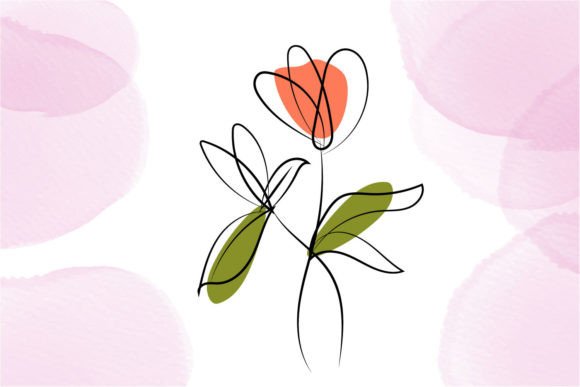
Floral logo design as vector illustration style line icon abstract artwork represents a conscious move towards simplification. Here, the floral motif is distilled to its essential geometric forms—a single continuous line forming a tulip, a set of clean arcs suggesting a bloom, or overlapping circles creating an abstract flower. This style embraces minimalism, modernity, and clarity. Its strengths are formidable in today's digital-first environment: it is highly memorable, performs excellently at all sizes, and integrates seamlessly into clean, contemporary brand layouts. It often feels more conceptual, allowing a brand to suggest "growth" or "nature" without literally depicting a specific plant.
The limitation, or rather the consideration, is that this abstraction can sometimes sacrifice immediate category association. A highly abstract line icon may not instantly signal "floral" or "botanical" to all viewers without supporting brand context. Choosing between a detailed illustration and an abstract line icon often hinges on the brand's desired personality: ornate and tangible versus sleek and conceptual.
Evaluating Alternatives and Complementary Formats
Floral Logo Design, Vector Illustration is not the only path to a botanical brand mark. It's useful to compare it with other common alternatives to understand its unique fit.
One common alternative is the use of raster-based floral imagery, such as a watercolor painting or a photographed flower. These can offer unparalleled texture, depth, and a hand-crafted feel. The tradeoff, however, is the inherent limitation in scalability and flexibility. A watercolor logo cannot be resized infinitely without degradation, and altering its colors or isolating elements is often impossible without recreating the artwork. For a brand that will exist primarily in static, print formats at a fixed size, this might be acceptable. For a dynamic brand needing animation, adaptive color schemes, and digital ubiquity, vector illustration is typically the more robust foundation.
Another consideration is the use of hand-drawn, non-vector line art. While similar in spirit to the abstract line icon, a logo that remains in a raster format (like a scanned sketch) again faces scalability issues. The vector illustration approach converts that hand-drawn aesthetic into a scalable, editable format, preserving the artistic intent while granting technical longevity.
Key Decision Factors for Choosing a Vector Floral Logo
Deciding if Floral Logo Design, Vector Illustration is the right core strategy involves evaluating a few practical and strategic factors.
- Brand Application Diversity: If your logo must perform equally well on a mobile app icon, a corporate report PDF, and a physical store sign, the scalability of vector art is often non-negotiable.
- Future Adaptability: Brands evolve. Vector files allow you to later create a simplified version, change your brand color palette within the logo, or extract an element for a sub-brand without starting from scratch.
- Production Requirements: If you plan for physical merchandise like engraved products, embroidered textiles, or vinyl signage, the clean, path-based artwork from vector floral logo design is what most production vendors require.
- Desired Aesthetic: Are you aiming for a crisp, modern, and digitally-native look? The vector approach, particularly the line icon style, naturally aligns with this. If your brand identity is deliberately analog, textured, and anti-digital, a raster alternative might better express that ethos.
When Vector Floral Design Might Not Be the Best Fit
Despite its many strengths, Floral Logo Design, Vector Illustration is not a universal solution. There are scenarios where another approach could be more suitable. If the primary emotional goal is to convey raw, tactile artistry—think of a small, independent pottery studio or a handmade paper brand—a literal watercolor or ink-splash logo might connect more authentically, even accepting its technical limitations. The brand's scale matters; a very local business with minimal digital presence might not need the infinite scalability vectors provide.
Furthermore, the very precision of vector art can be a stylistic drawback for some. It can sometimes feel too sterile or digital for brands wanting to emphasize organic imperfection and human touch. In such cases, a vector floral logo might still be used as a practical base, but intentionally textured or roughened in application to soften its innate precision.
Integrating Floral Vector Logos into a Cohesive Brand System
Opting for Floral Logo Design, Vector Illustration, especially in an abstract line icon style, offers significant advantages for building a broader visual identity. The clean, geometric forms can be easily deconstructed into pattern elements, border details, or animated sequences for video content. The color areas in a vector logo are clearly defined, making it straightforward to develop complementary color palettes for websites and marketing materials. This modularity is a hidden strength; the logo becomes a toolkit, not just a static image.
Ultimately, the choice between a detailed floral illustration and an abstract line icon—and the choice between vector and other formats—should stem from a clear understanding of your brand's narrative, its practical touchpoints, and its future direction. Floral Logo Design, Vector Illustration provides a powerful, flexible, and professional foundation for brands rooted in natural beauty. By weighing its distinctive capabilities against the qualities of alternative styles and formats, you can make a more informed decision that balances artistic expression with long-term brand utility.